Co-Occurrence of Chronic Histiocytic Intervillositis, Trophoblast Villi Necrosis and P...
Copiado!
Nogueira R1,2*, Silva F3, Soares E4, Matos J5, Silva AR6, Martins M7, Rocha D8, Azevedo A1, Conceição C1, Cardoso PL6
Co-Occurrence of Chronic Histiocytic Intervillositis, Trophoblast Villi Necrosis and Polymerase Chain Reaction Prove Placental and Fetal/Neonatal Infection by SARS-Cov-2: A Case Series
Abstract
COVID-19 infection began as an epidemic in China and has rapidly spread to a wide number of nations, with the number of infected people increasing every day. Pregnant women are susceptible to a more severe course of pneumonia because of physiologic maternal adaptations to pregnancy, with increased morbidity and death as a result.
Placental pathology in maternal infection settings by Severe Acute Respiratory Syndrome Coronavirus 2 (SARS-CoV-2) remains a topic of great interest. It is known that direct involvement of the placenta by SARS-CoV-2 is a rare event even using an immunohistochemical study, also the placental lesions in this context are heterogeneous and complex with a pathophysiology not yet fully understood.
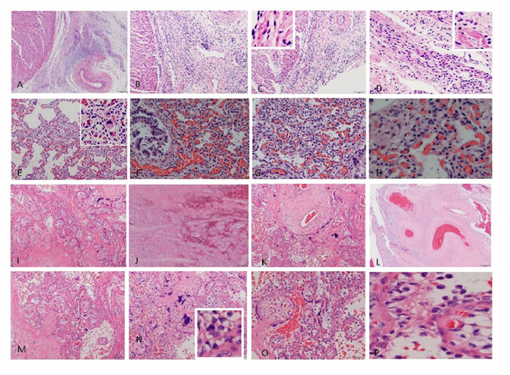
We herein report three cases of uncommon co-occurrence of placental phenotypes related to maternal SARS-CoV-2 infection, one of them associated with neonatal death at day 9 of life, due to cardiac tamponade. SARS-CoV-2 infection was confirmed by polymerase chain reaction (PCR) in the placenta and in the lungs and heart of the neonate.
While our cases demonstrate an uncommon placental phenotype related to SARS-CoV-2 infection, the significance of these findings is by itself nonspecific requiring additional molecular studies to prove the meaning and consequence of different placental histopathological features.
Keywords
Atypical Red Blood Cells; Chronic Histiocytic Intervillositis; Polymerase Chain Reaction; Placental Lesions; Pregnancy SARS-Cov-2 Infection; Trophoblast Cell Necrosis